
Sagittaria latifolia
Northern Arrowhead, Duck Potato

General
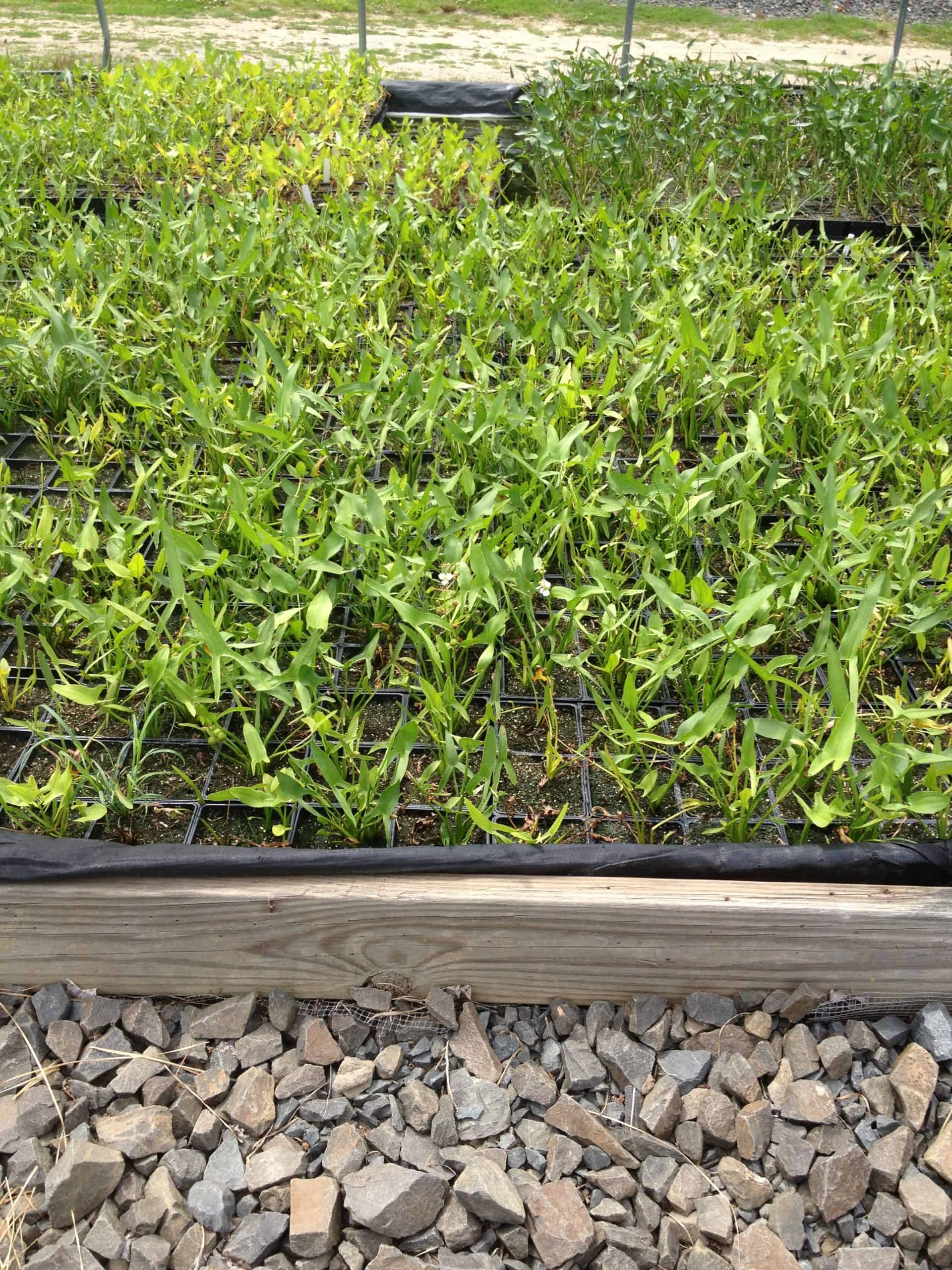
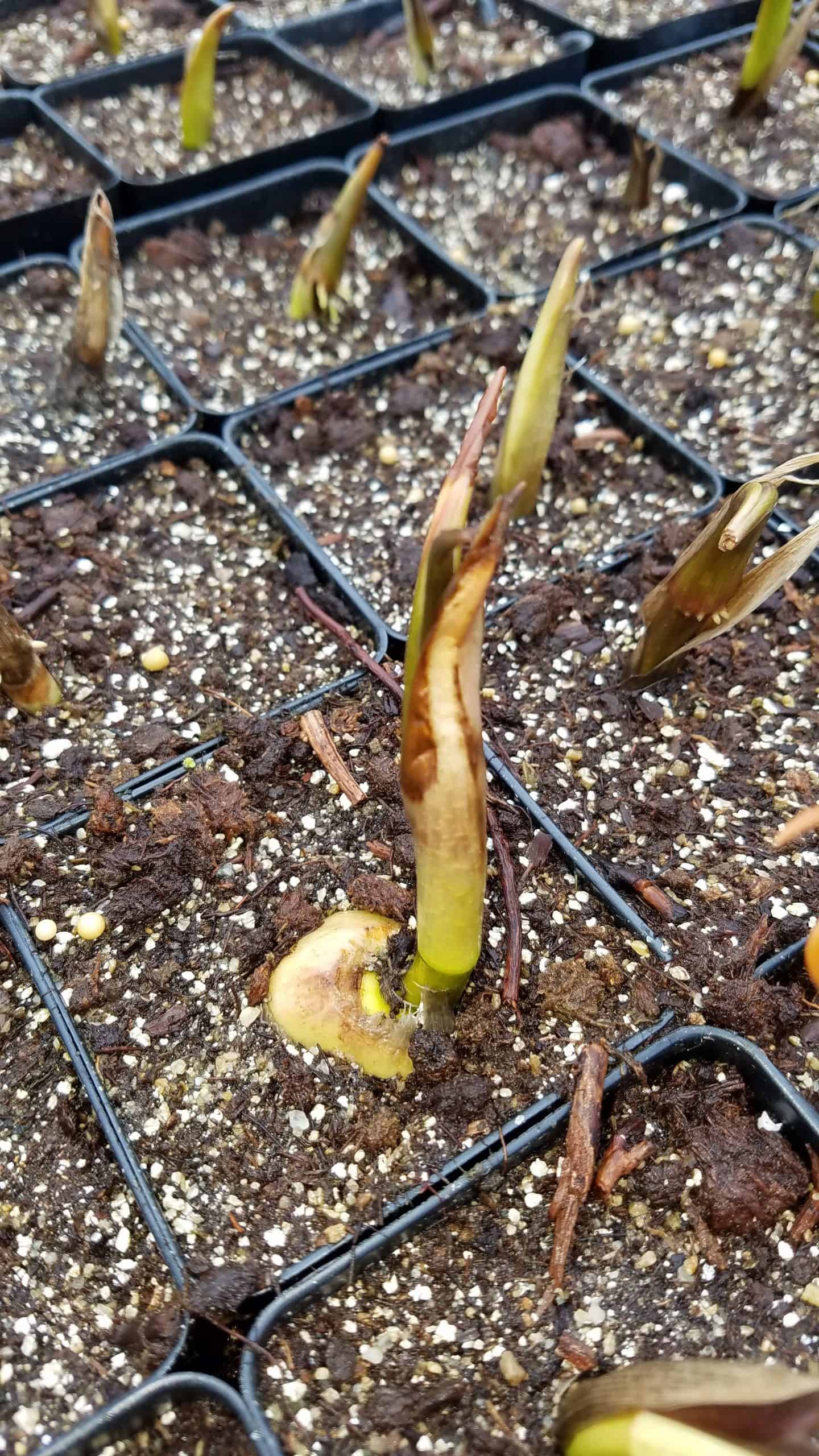
Duck potato is a tuber-producing plant usually found growing on shore edges or in up to 2' of water. It is an important food source for waterfowl, beaver, and muskrat. Despite being called "duck potato", ducks do not usually eat the tubers of this plant, and prefer the seeds instead. The tubers are edible and can be prepared and eaten in the same manners as potatoes, and have a slightly nutty flavor. Duck potato is good for water quality basins and restoration projects, and should not be planted in the fall.
Plant Description
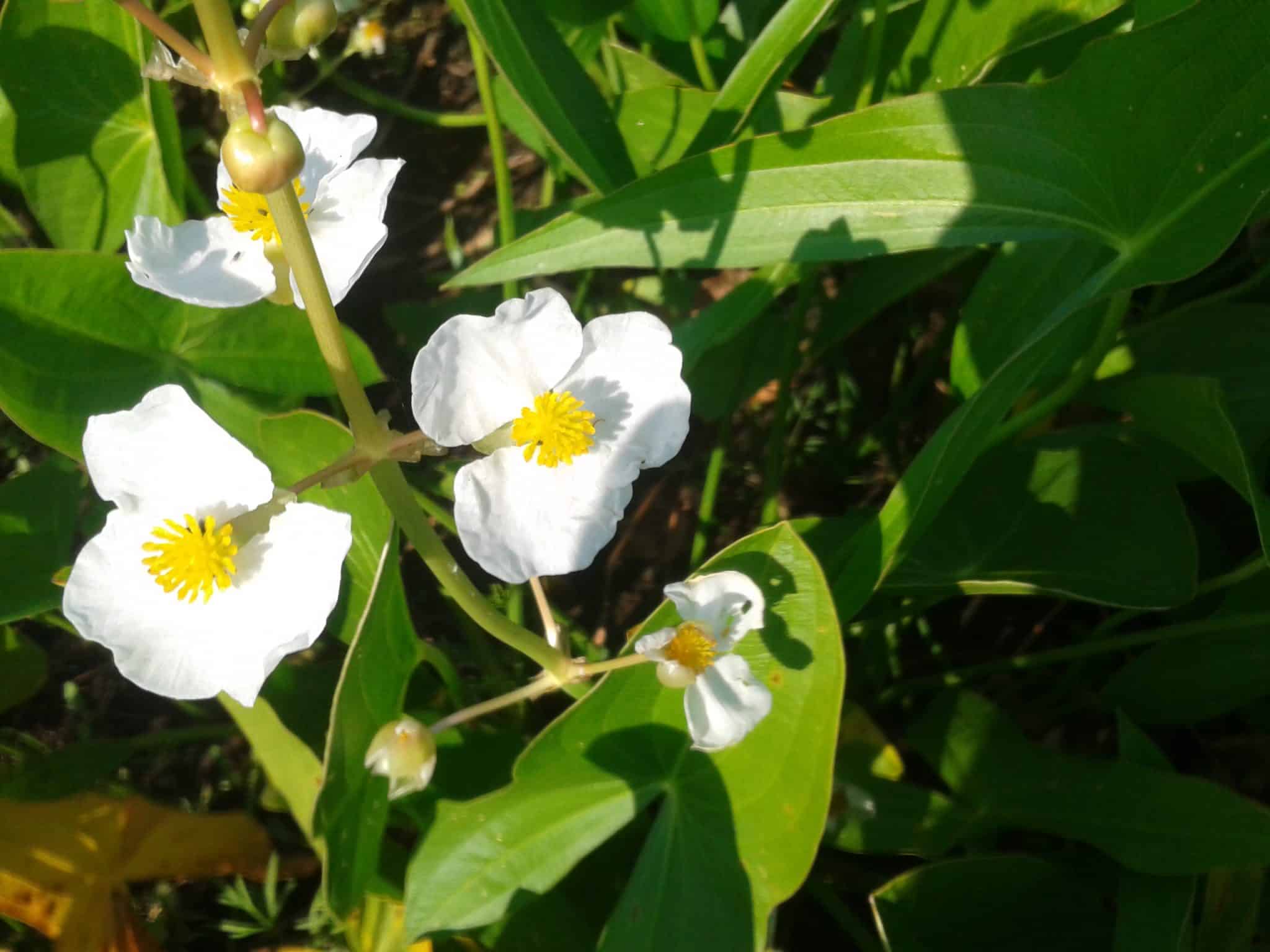
Broad, flat, arrow-shaped leaves sometimes reaching over a foot long. White flowers with yellow or green centers grow in whorled racemes. The tubers are mostly under ground/under water, but may float to the surface at the end of the growing season. Usually occurs in clusters on the water's edge.
Height (ft)
1-4'
Soil moisture
Wet
Soil types
Shallow water, fertile soil
Wetland indicator
OBL
Shade tolerance
Intolerant, Full Sun
Bloom color
White
Bloom period
Summer
Drought tolerance
None
Salinity tolerance
None
Range
Common throughout the eastern half of the United States. Scattered populations throughout the western half of the US, and introduced in parts of California and Hawaii.

Kartesz, J.T. 2024. Floristic Synthesis of North America, Version 1.0. Biota of North America Program (BONAP) [website http://bonap.org/]
Additional Information
According to the BRIT - Native American Ethnobotany Database, this species has been used by many tribes as food and medicine. The Cherokee used an infusion of leaves as a tea and wash for feverish babies. Many tribes used the "potatoes" at the end of the roots as part of their diet. They would dry and boil them or use them as "winter food." Compound decoctions were made for treating abdomen issues in children and used as a love charm by Thompson tribe.