
Alisima subcordatum
Water Plantain
General
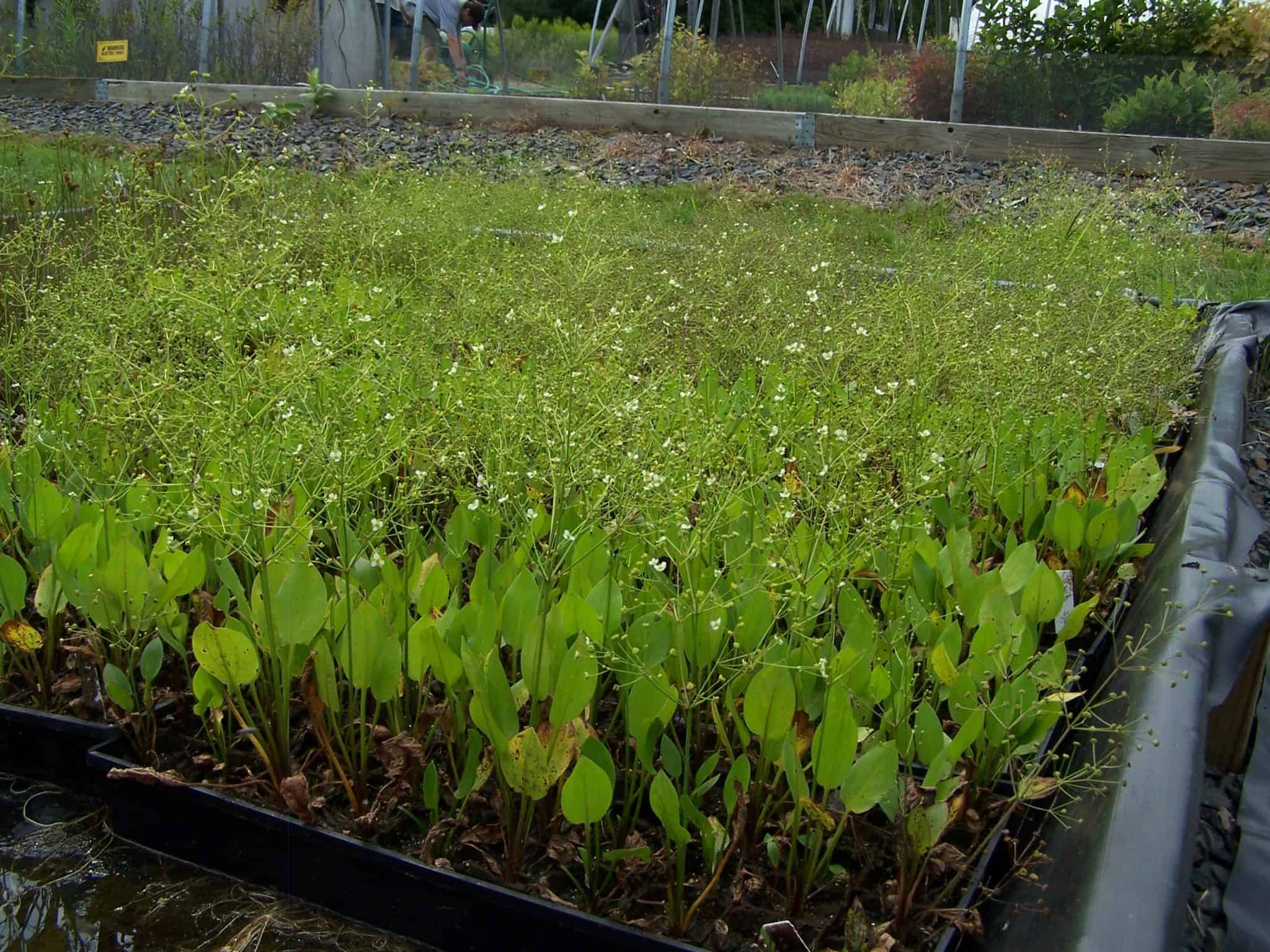
An obligate wetland plant with almost heart-shaped leaves and tiny white flowers. Water plantain is a food source for waterfowl, beavers, and muskrats. Historically, it has been used by different Native American groups for minor injuries and indigestion.
Plant Description
Usually growing under 2 feet. Found most commonly on wet soils and shallow water. Small white flowers with three petals and sepals each. Ovate or heart shaped leaves. Smooth, light green foliage. While the plant can grow in shallow water, the leaves will not grow under water.
Height (ft)
0.5-2
Soil moisture
High
Soil types
Fine to medium textures, muddy soils
Wetland indicator
OBL
Shade tolerance
Intolerant, Full sun
Bloom color
White
Bloom period
Summer
Drought tolerance
None
Salinity tolerance
None
Range
Eastern United States, from Maine to Minnesota in the north and North Carolina to Oklahoma in the south.

Kartesz, J.T. 2024. Floristic Synthesis of North America, Version 1.0. Biota of North America Program (BONAP) [website http://bonap.org/]
Additional Information
According to Lady Bird Johnson Wildflower Center, Native Americans would dry and eat the bulb-like base. According to the Native Plant Trust, the Cherokee used this species topically to treat wounds, bruising and swelling. The Cree would also ingest the stem base to treat stomach conditions.