
Acer rubrum
Red Maple
General
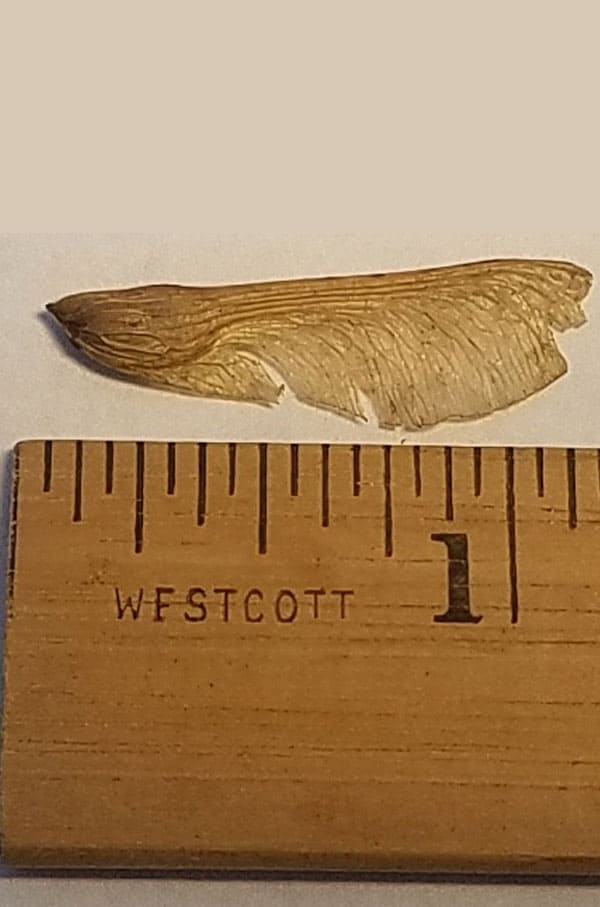
Red maple is one of the most successful and abundant trees in the Northeastern United States. Red maple is a valuable riparian buffer plant due to its tolerance of wetter soils, but is also found growing on a wide variety of sites: sunny or shady, dry or moist. Because of its abundance and wide distribution, the early-produced pollen of red maple may be important to bees and other pollen-dependent insects. The seeds, buds and flowers are eaten by various wildlife species. Squirrels and chipmunks store the seeds, and white-tailed deer, rabbits and moose use it for browse. Cavities in red maples in river floodplain communities are often well suited for cavity-nesting species, like the wood duck and others. Individual plants can be male, female or bisexual. And within bisexual plants individual branches may exhibit flowers that are entirely male, female or bisexual. The early spring flowers are pink to dark red. Overall, a fast-growing species that transplants successfully while young.
Plant Description
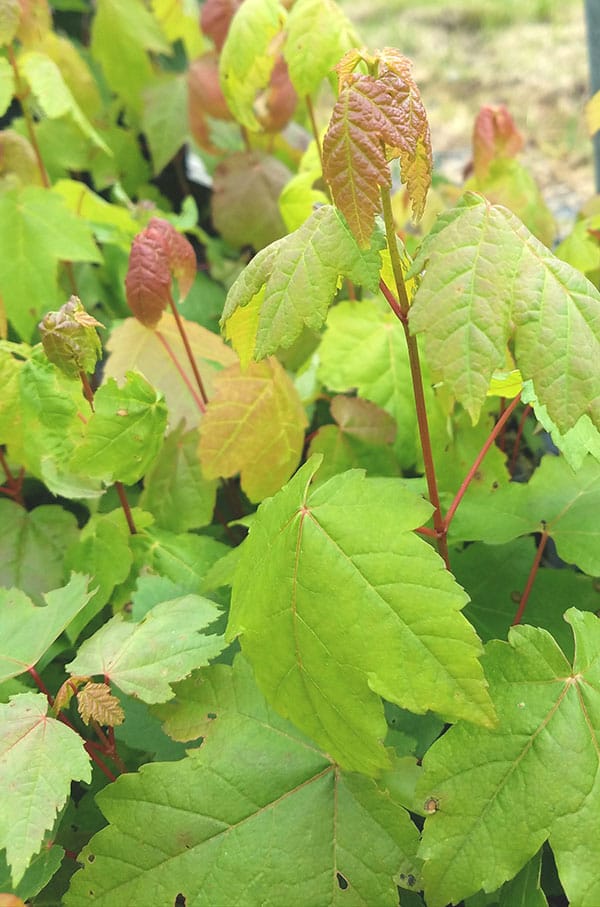
A tall deciduous tree, normally 60 to 80 ft, occasionally up to or over 100 ft. Leaves opposite, and palmately lobed. Twigs usually reddish, flowers appear before leaves. Terminal (central) leaf lobe is “less to slightly more” than half the length of the entire leaf blade, and the base of the terminal (central) lobe is the widest part of the terminal (central) lobe. Sinuses at the base of each lobe a distinct “V” shape, not “U” shape.
Height (ft)
60-80 (to 100)
Spread (ft)
30-40
Soil moisture
Highly variable from swamps/peat bogs up to dry ridges, but prefers moist, well-drained soils
Soil types
Tolerates a wide range of soil types, and all textures (fine/medium/coarse).
Wetland indicator
FAC
Shade tolerance
Full Sun-Part Shade
Bloom color
Red
Bloom period
Early spring
Fall conspicuous
Yes (red to orange)
Anaerobic tolerance
Medium
Drought tolerance
Medium
Salinity tolerance
None
Self-Pollinating?
Yes
Range
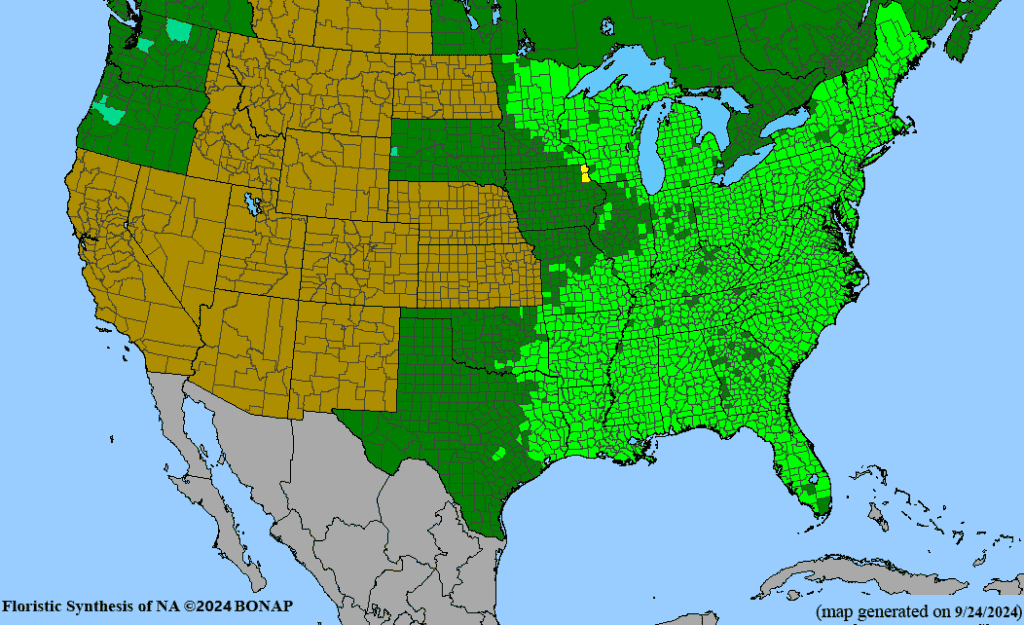
Commonly found throughout New England, and is, perhaps, the most abundant and widespread tree in the Northeast. The -40°F isotherm in southeast Canada is the northern limit of Red Maple’s range.
Additional Information
According to BRIT - Native American Ethnobotany Database, many tribes have used the sap as sweetener and to make syrup to sweeten food. An infusion of the bark has been used to treat cramps and dysentery. The wood has been used to make baskets as well as timber wood, furniture and carvings. The Iroquois dried the bark and sifted the bark powder into bread.